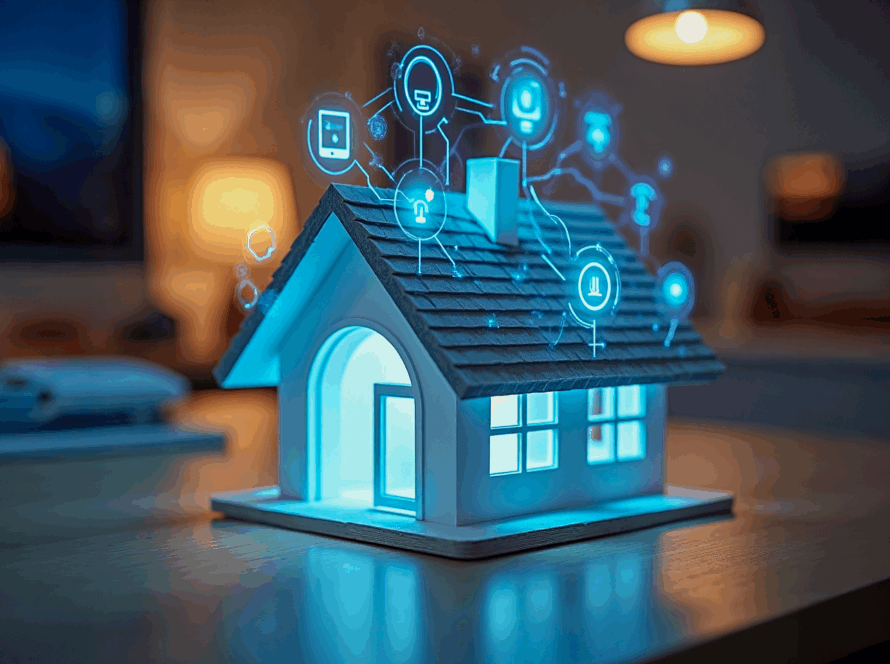
Senior care is entering a new phase, one where the best gerontechnology is the kind residents barely notice. As ageing populations grow and care teams face increasing pressure, senior living providers are looking for ways to improve safety, independence, and efficiency without making daily life feel clinical or intrusive.
That is where ambient intelligence comes in. Instead of relying only on scheduled checks, wearable devices, or manual observation, ambient systems can quietly monitor surroundings, detect changes, and support caregivers in real time. The goal is not to replace human care, but to make care more responsive, more proactive, and more dignified.
From reactive to proactive
Traditional senior care often depends on reaction. A caregiver notices a change, a resident presses a button, or a problem is discovered after it has already escalated. That model can work, but it leaves gaps, especially during busy periods, overnight hours, or in facilities with limited staff.
Ambient intelligence changes the rhythm of care. Sensors, connected devices, and intelligent platforms can continuously observe patterns in movement, sleep, temperature, room activity, and daily routines. When something shifts outside the expected range, the system can alert staff before a small issue becomes a serious one.
This shift matters because many incidents in senior care do not happen suddenly. They often begin with subtle changes: reduced movement, disturbed sleep, irregular routines, or unusual environmental conditions. When these signals are caught early, caregivers can intervene sooner and more effectively.
Safety without intrusion
One of the biggest challenges in gerontech is balancing safety with privacy. Older adults want to feel secure, but they also want to feel respected. Families want reassurance, but they do not want their loved ones to feel watched all the time.
This is where ambient systems have an advantage. They can support safety through passive monitoring rather than constant human intervention. Instead of asking residents to adapt to the technology, the technology adapts to the environment and the resident’s normal routine.
This approach is especially valuable in memory care and assisted living settings. Residents may forget to wear devices, remove them, or find them uncomfortable. Ambient systems reduce that burden by operating quietly in the background, helping staff respond faster while preserving a more natural living experience.
A better experience for caregivers
Caregiver workload is one of the biggest pressures in senior living today. Staff are often responsible for many residents at once, and a large share of their time can be absorbed by routine checks, repeated walk-throughs, and manual documentation.
Ambient intelligence can help reduce that burden. By automating observation and surfacing only meaningful alerts, it allows staff to focus on care that requires human judgment and empathy. Instead of spending time confirming that nothing is wrong, caregivers can spend more time where they are needed most.
This does not just improve efficiency. It can also improve morale. When staff have better information and fewer repetitive tasks, their work becomes more purposeful. That can make a real difference in facilities facing recruitment and retention challenges.
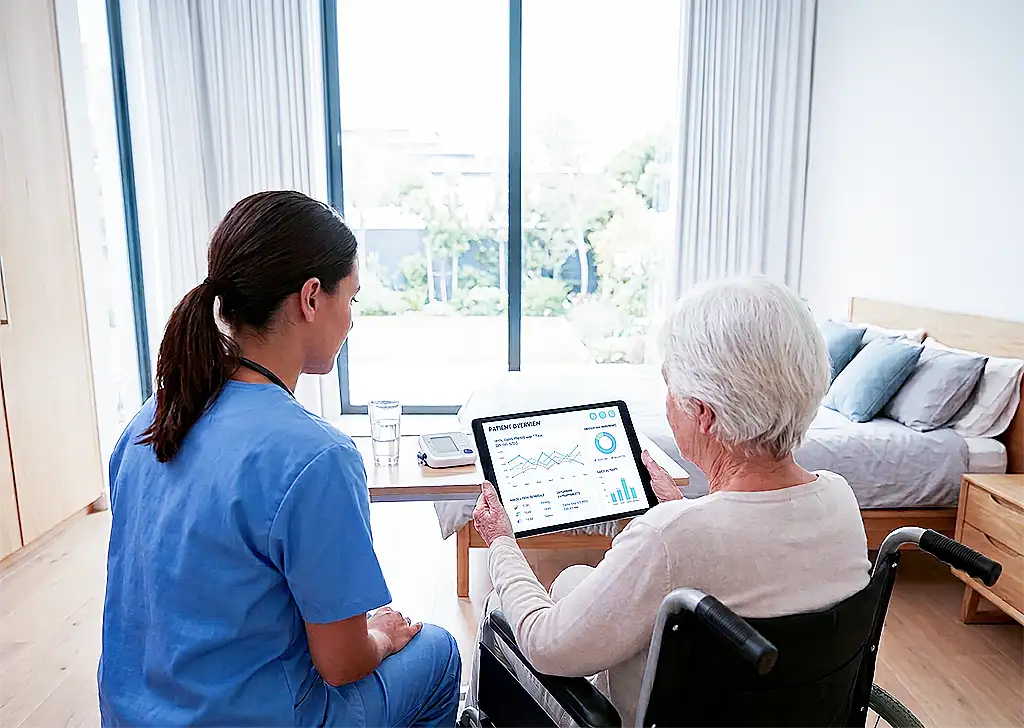
Dignity through design
Senior care is not only about health outcomes. It is also about dignity. Older adults should not feel that every movement is being tracked in a way that reduces them to data points. Good technology should support independence, not undermine it.
Ambient intelligence can be designed with that principle in mind. It does not need to be loud, visible, or disruptive to be effective. In fact, the most successful systems are often the ones that blend into daily life so naturally that residents barely notice them.
That matters because dignity is not a soft benefit. It influences how residents feel about their living environment, how families view the quality of care, and how confident staff are in the system they use. When technology is thoughtful, it becomes part of a more humane care model.
Why this matters now
The demand for senior care is rising, while staffing resources remain constrained. Families are also expecting more transparency, better communication, and higher standards of responsiveness. In that environment, facilities need solutions that can scale without sacrificing the human side of care.
Ambient intelligence is well suited to that challenge. It offers continuous support, better visibility, and faster response times without placing additional pressure on residents or staff. It also aligns with a broader shift in healthcare: away from isolated tools and toward integrated systems that work together.
For senior living providers, this means the conversation is no longer just about monitoring. It is about creating intelligent environments that support wellbeing around the clock. That includes safer rooms, smarter workflows, and a more connected relationship between residents, caregivers, and families.
The future of senior living
The future of senior living will not be defined by how much gerontech is visible. It will be defined by how effectively technology disappears into the background while still making care better.
That is the promise of ambient intelligence. It enables facilities to move from reactive management to proactive support, from fragmented observation to continuous awareness, and from intrusive oversight to respectful assistance.
In the years ahead, the most successful senior care environments will likely be the ones that feel calm, responsive, and human. The technology behind them may be advanced, but its greatest strength will be how little residents have to think about it.
That is what invisible care looks like: safer, smarter, and more dignified living for ageing societies. Howood International continues to explore how intelligent solutions can help shape this future of care.